


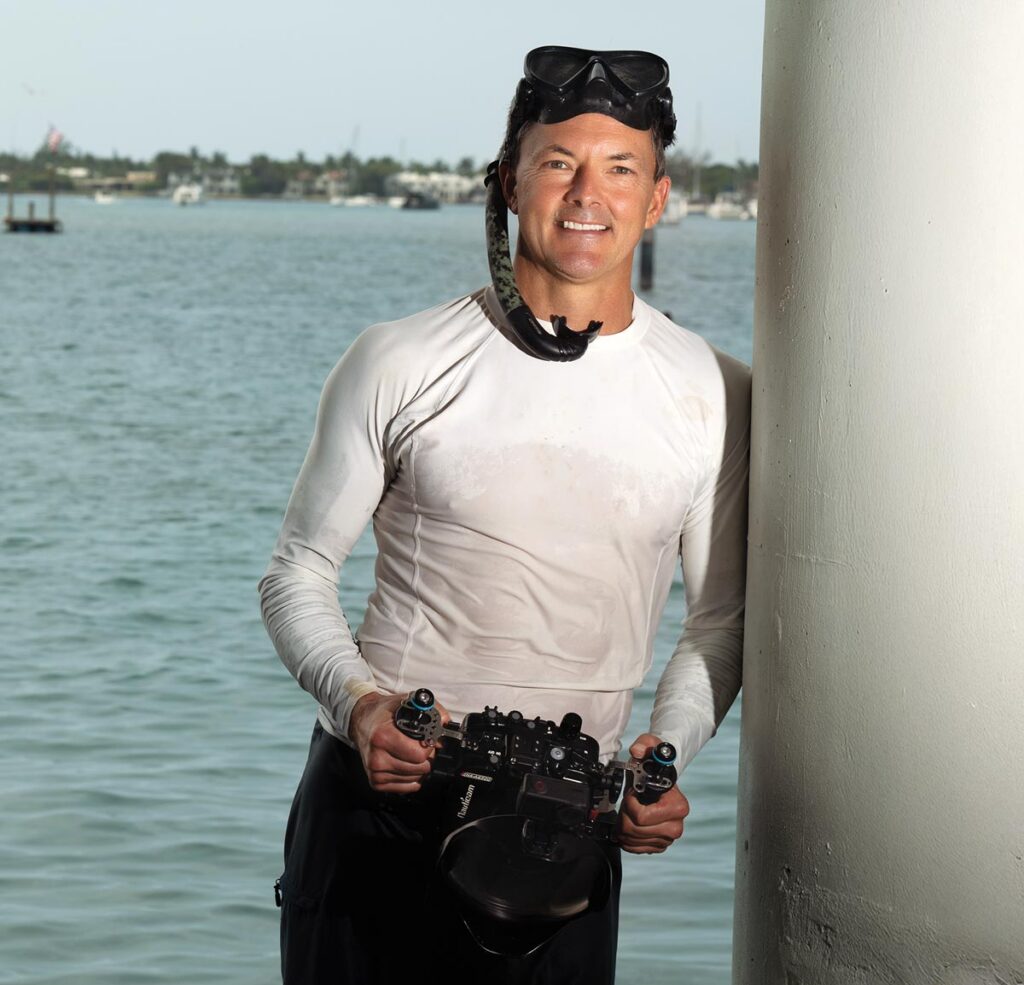
Diving above an offshore shipwreck with a snorkel, mask, and fins, Paul Dabill surfaced with the amberjack he had been hoping to spear—and the realization that he wasn’t the only apex predator nearby.
“My buddy said, ‘Oh my God, there’s a great white shark,’” Dabill recalls. Curious, he slipped back into the water. “I put the fish I shot on the boat and got back to where my buddy saw the shark,” he says. “And sure enough, it was right there.”
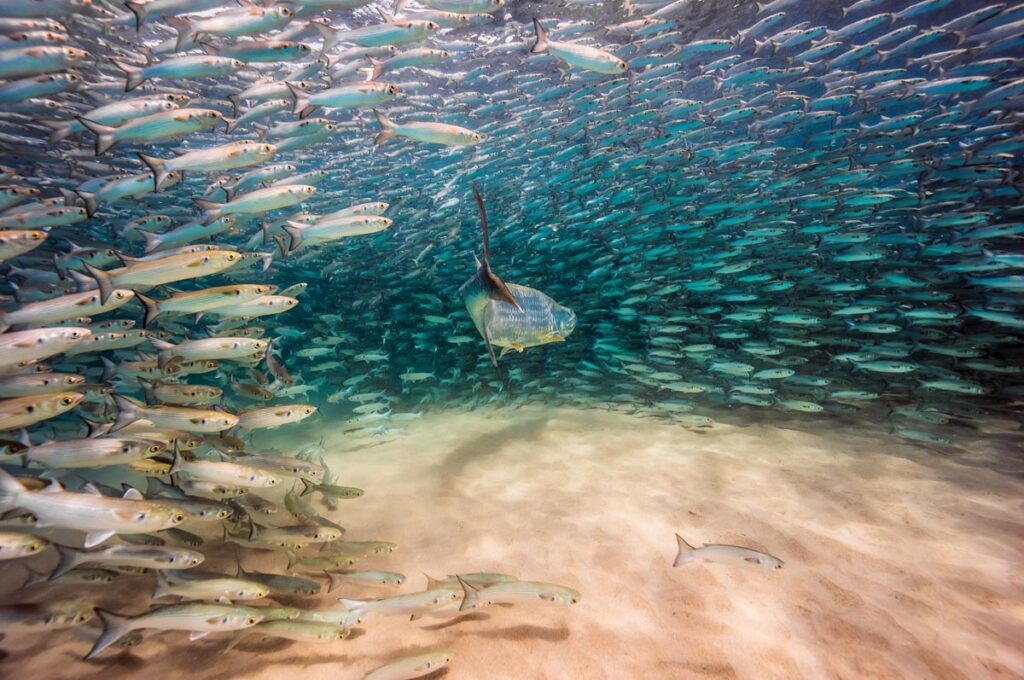
For many people, spotting one of the ocean’s most feared predators would be reason enough to call it a day. For Dabill, it was just another of many unforgettable encounters across nearly two decades spent exploring—and documenting—the marine life just offshore of Palm Beach County.
Since moving to Jupiter from Minnesota in 2002 to operate a Jimmy John’s Sandwiches franchise with his brother Tom, Dabill has embraced South Florida’s waters with the same enthusiasm he once reserved for the outdoors back home. After the brothers sold their five stores in 2024, he devoted even more time to his lifelong interests in photography, videography, and the ocean.
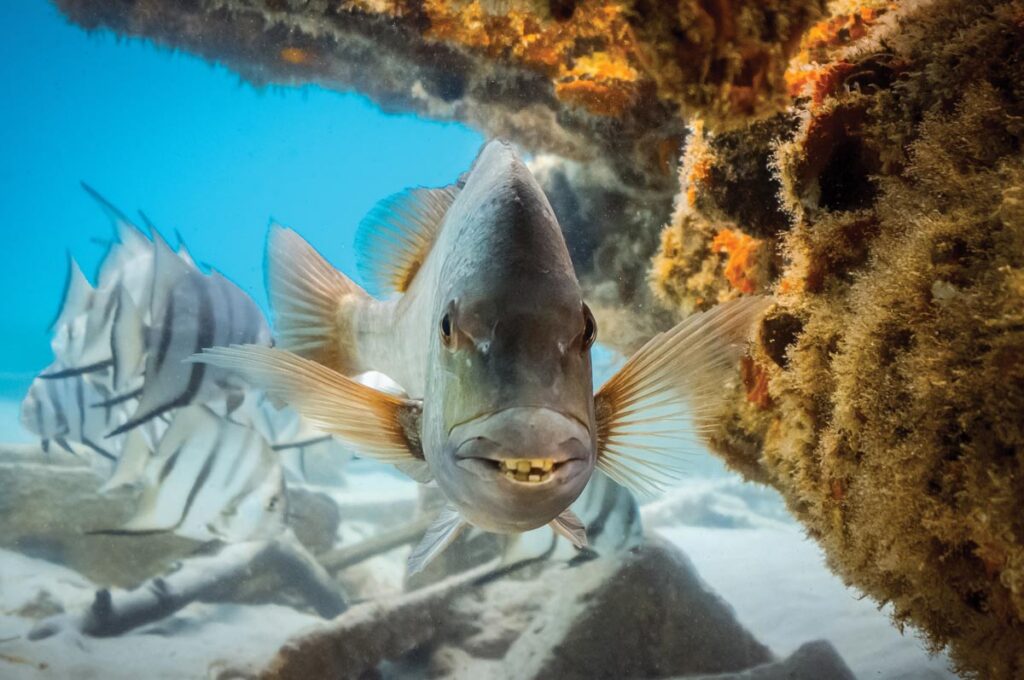
Whether he’s freediving over reefs and wrecks, drifting through schools of fish, or flying a drone high above the coastline, Dabill is driven by one goal: capturing moments most people never have the chance to witness. Those moments have found an audience. Since launching his social media presence in 2012, Dabill has attracted more than 600,000 followers on Facebook and more than 50,000 on Instagram, all eager to experience South Florida’s underwater world through his lens. But his images do more than inspire awe—they’re also contributing to marine science.
He admits to having “a little bit of concern” being so close to that rarely spotted great white shark. Reality proved less daunting. The predator’s behavior was similar to other sharks Dabill has encountered with increasing frequency since he began freediving around 2009. He proceeds cautiously—and opts to stay out of the water with swordfish, which he considers the most dangerous species in local waters—but with eager curiosity.

When Dabill shared his video of the great white shark online, researchers at the Atlantic White Shark Conservancy reached out to compare the animal’s markings against their database. “It turned out that shark hadn’t been previously identified,” he explains. He was given the chance to name the shark—Trenton in honor of his 8-year-old son.
Trenton’s twin sister, London, also has a sea creature named for her—leaving only 12-year-old Gigi without an underwater namesake. London, the 9-foot-wide juvenile female manta ray, was being studied but hadn’t yet been photographed by the Florida Manta Project. Dabill had posted videos of the ray when Jessica Pate, founder of the conservation and awareness organization, conducting the first long-term study of manta rays in the continental United States, reached out. His drone footage helped Pate’s team positively identify and photograph the creature for the first time.
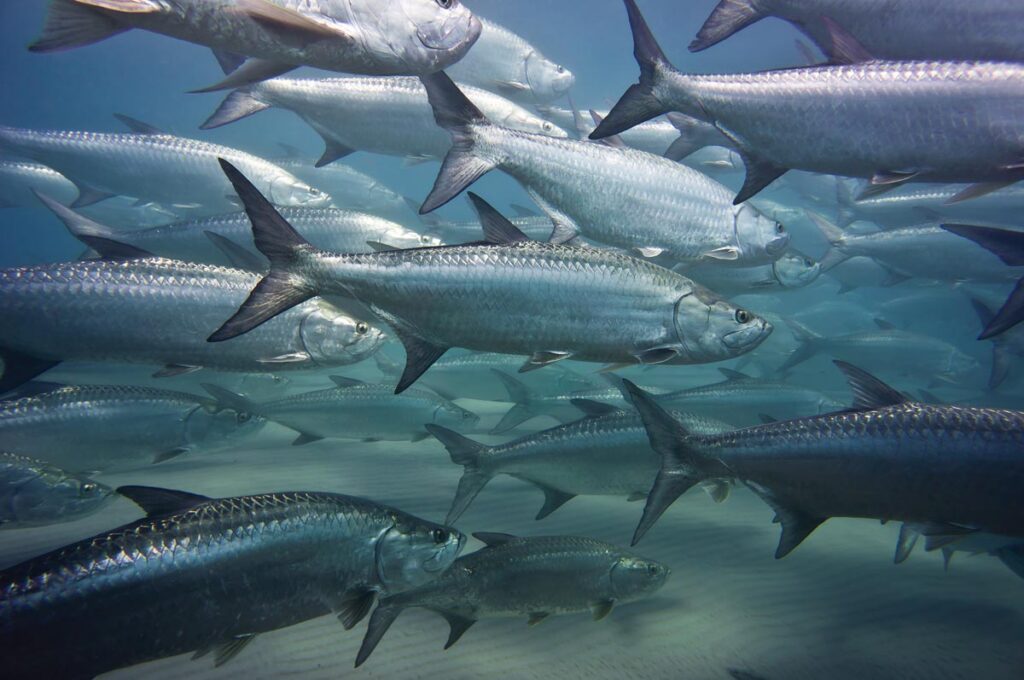
“Citizen scientists like Paul are critical to our work,” Pate says. “They provide [important] information about the spatial distribution of manta rays. It’s always a special treat to find someone like Paul who is always out with his drone and wants to share data supporting conservation.”
Dabill discovered the power of drone photography while temporarily living in a condominium on Juno Beach as he and his wife, Joy, built a new home in Tequesta. Flying nearly every day, he began seeing the coastline from an entirely different perspective.

“On my drone, I followed massive schools of jack crevalle and tarpon,” he says. “I saw manatees and hammerhead sharks and leatherback turtles and all kinds of stuff going on. The ocean is dynamic, constantly changing, and I’m able to film all the activity with my drone.”
Those aerial views have become more than striking imagery; Dabill has found them to be an ideal way to document fish migrations and rapidly changing conditions around local inlets that can help boaters navigate safely. “The drone is a great tool to see where sandbars are when you’re navigating around there,” he says.

Local inlets are among his favorite places to photograph. “They’re a magnet for marine activity,” he says. “The Jupiter Inlet is just stacked full of snook. There are goliath groupers and cubera snapper. I’ve found so many amazing species.”
For those who prefer to admire marine life from dry land, Dabill’s work is becoming more accessible than ever. Dabill is publishing Ocean Life, Underwater Worlds, a 2027 calendar with the Loggerhead Marinelife Center in Juno Beach. Produced by Omnidon Productions, the calendar is the organization’s first in Florida, and a portion of proceeds will support Loggerhead’s sea turtle rehabilitation and ocean conservation efforts. Still, no printed image can fully replicate the feeling that keeps drawing Dabill back into the water.
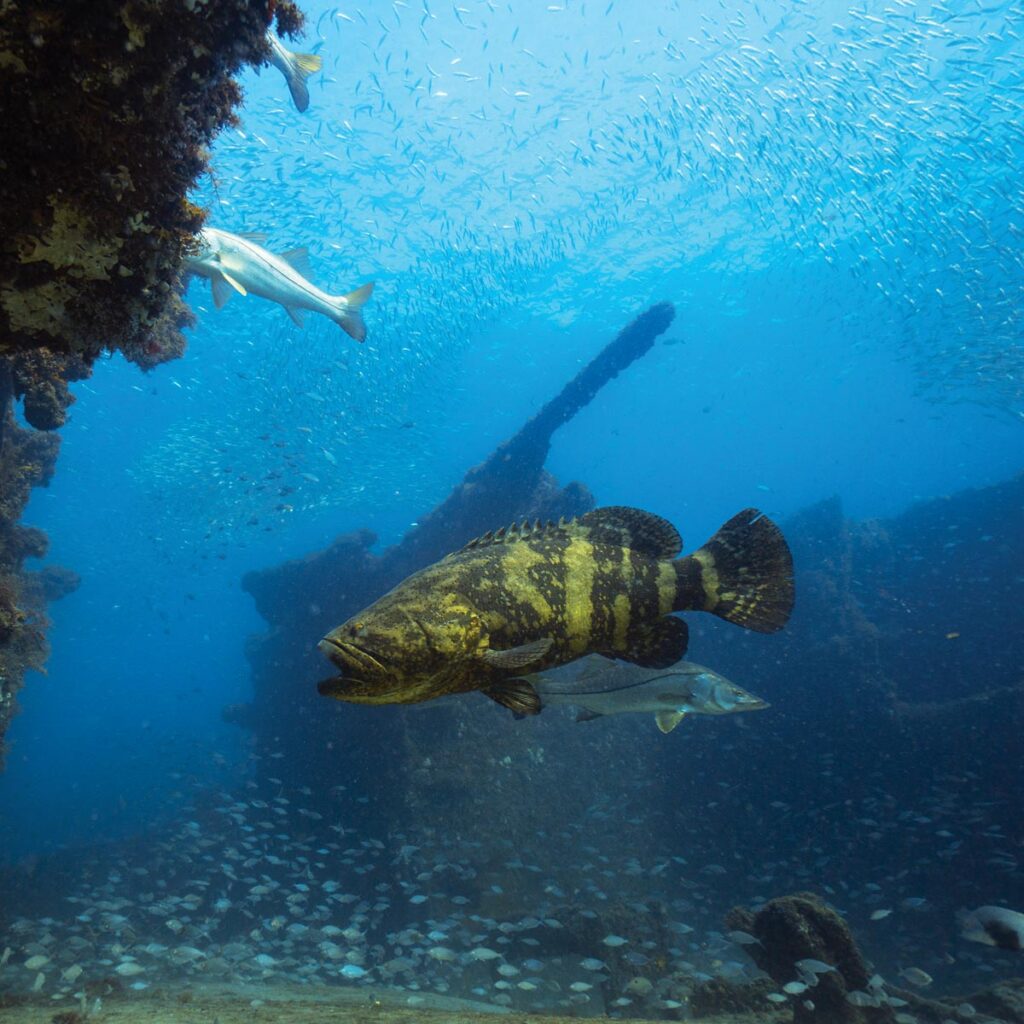
“I feel fortunate,” he says. “I was able to take my interest in photography and digital cameras and being creative and merge it with the marine environment.”
Luckily for the rest of us, Dabill’s photographs bring that hidden world to the surface—revealing the remarkable wildlife, unexpected encounters, and vibrant marine life thriving just beyond our shoreline.






Facebook Comments