



It takes a village to raise a child, and in a water-centric place like South Florida, an essential member of that village is a swim instructor. Since 1993, Joan Arpe (fondly known as “Ms. Joany”) has helped thousands of families keep their children safe in the water, teaching the Infant Swimming Resource (ISR) method.
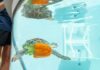
“It’s a behavioral science in the water,” Arpe says of the method developed in 1966 by Harvey Barnett, Ph.D., a professor in the psychology department at the University of Florida, which uses touch to develop muscle memory. The program teaches infants aged 6 to 12 months how to stay afloat in the water and remain calm through breath control, head orientation, and rolling onto their backs. When they are between 1 and 6 years old, kids learn to repeat a three-step sequence of swimming, floating, and swimming until reaching the edge or stairs. During some lessons, students wear clothing and shoes, since young children are often dressed when they accidentally fall into bodies of water like swimming pools. Through simulated fall-ins, tots build confidence to self-rescue until help arrives.

Arpe offers ISR lessons at various locations in Palm Beach County, including Jupiter and Tequesta. The program runs five days a week for a minimum of four weeks (some children may require additional weeks), and the cost is $50 per 10-minute lesson. All individual lessons are given one-on-one, as parents stand poolside and watch.
Many of Arpe’s ISR lessons are held at the Live Like Jake Foundation indoor heated pool in Palm Beach Gardens. The local foundation established by Keri and Roarke Morrison, who tragically lost their 2-year-old son Jake to a drowning accident in 2013, generously makes the program accessible to all income levels through need-based scholarships.
8 Ways to Help Prevent a Drowning Tragedy
Joan Arpe offers some useful tips for keeping your kids safe around water
• Enroll children in swimming lessons!
• Learn CPR
• Effective adult supervision is crucial; if hosting a pool party, hire at least one lifeguard
• Create a barrier by installing a pool fence
• Install locks and alarms on doors and windows, and make sure any pet doors are locked
• Keep the pool area clear of toys that could attract a child to the pool
• Do not use the pool area as a playpen; when your children are done swimming, have them play elsewhere, away from the pool
• Avoid blue swimsuits, which blend into the water and make it harder to recognize a child in distress; opt for bright-colored swimwear that is easier to spot








Facebook Comments