


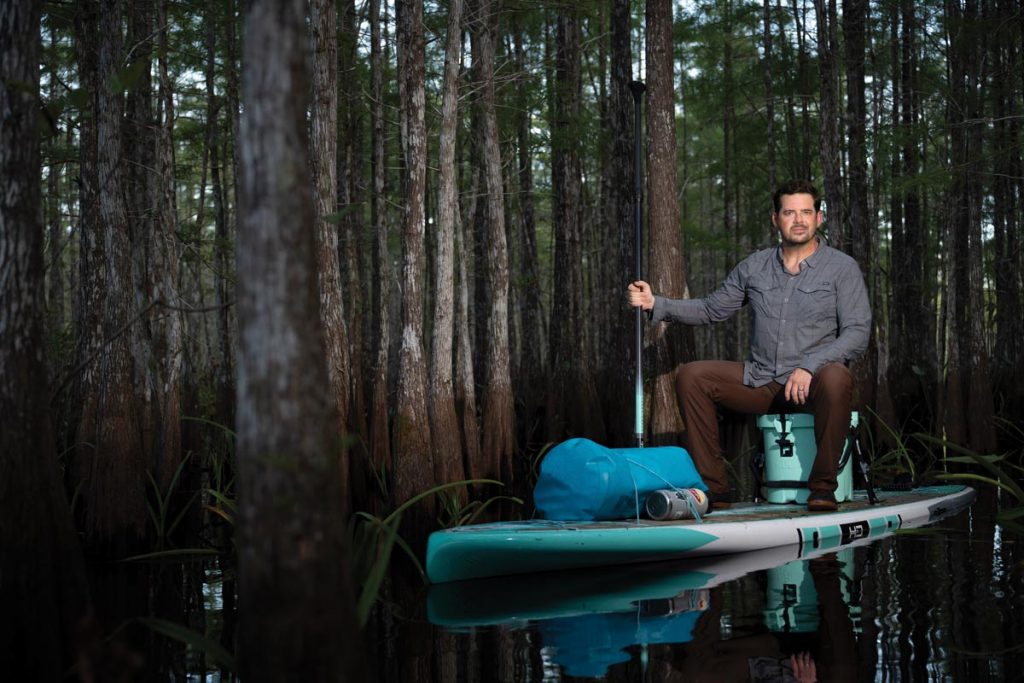
Benji Studt looks back fondly on childhood camping trips with his family to places like the Okefenokee Swamp on the Florida-Georgia border, the Florida Everglades, and the Florida Keys. “That really solidified my connection to wild Florida,” he says. Today, Studt shares his love of nature through education, advocacy, and photography, hoping to inspire others to connect with—and respect—the natural world around us.
Studt’s dad worked for the Army Corps of Engineers, which took the family back and forth between Florida and the D.C. area when Studt was a kid. “My father worked in wetland restoration and helping to write the original Comprehensive Everglades Restoration Plan (CERP),” says Studt, who now resides in Hobe Sound. “Swamps and wild Florida have always been close to my heart.”
Studt studied Environmental Science at the University of Florida and began his professional career in 2003 at the South Florida Water Management District, where he worked in wetland regulation. His job was to assess potential environmental impacts of projects like new marinas, roadways, and commercial developments. In 2006, he took a position with Palm Beach County Environmental Resources Management (ERM), where he had interned while a student at UF. He started in the Natural Areas division, tasked with managing and restoring the county’s natural areas. He was also a part of the prescribed fire team. “I came home and told my wife I was going to set the woods on fire, and she said, ‘No you’re not!’” he recalls with a laugh.
It was in 2010 that his passion for photography was ignited. His wife saw a photo of the iconic Spanish moss–covered live oak in the Kanapaha Prairie (just south of Gainesville) shot by renowned nature photographer Mac Stone and wanted to buy it. The price tag was out of reach for the young couple, so Studt promised one day he would take a similar photo himself. He promptly set about teaching himself the art of photography, which he quickly learned was highly nuanced when it comes to nature photography specifically.
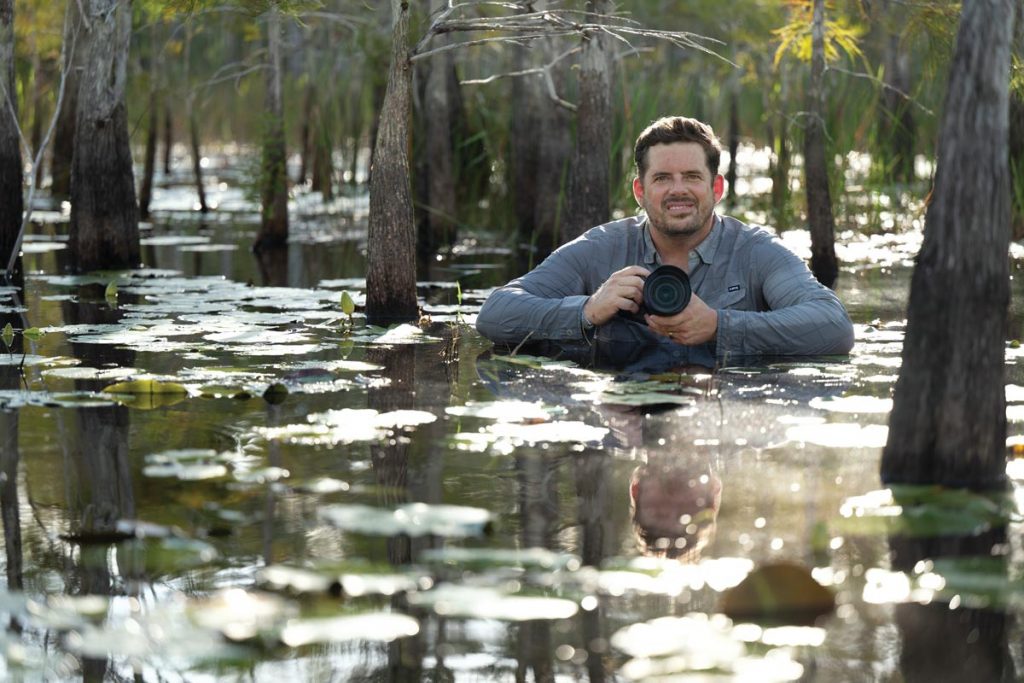
“Natural light is literally changing by the second, so being able to understand what is coming, anticipating changing conditions, and being able to execute in the moment is all so critical,” he says. “In Florida, those factors are compounded by the fact that we have an extremely flat landscape. Here, the weather is our “mountains.” The cloudscapes are incredible, and no two clouds or sunsets or sunrises are the same. You have to create compositions that tell a story on the fly, in real time, as the light is changing.”
The camera became a means for Studt to share his love of natural Florida. “I realized I love to tell stories about wild Florida because it is so misunderstood by so many people,” he says. “I use photography to show places that have a warped story, in a beautiful way that invites people in.”
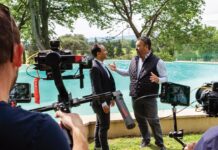
After nine years in the Natural Areas division at ERM, Studt was asked to lead the agency’s outreach and science communications efforts, a position he still holds today. He describes his work as “translating science to communicate to people how special our natural places are.” In 2011, he spearheaded the production of Hidden Wild, a documentary that follows three local teenagers on an expedition to the most hidden landscapes in the Palm Beaches. And he is currently holding private viewings of a new documentary, Tracking Kites, which follows the journey of swallowtail kites and the people who study them over the course of six years. ERM worked with Avian Research and Conservation Institute and the Palm Beach Zoo and Conservation Society on the film.
Outside of his professional work, Studt uses his in-depth knowledge of wild Florida to educate and inform the public on various issues. Many locals may recall the controversy that surrounded a proposal to build a golf course at Jonathan Dickinson State Park last year. Studt was one of many passionate individuals who stepped up to stop it from happening, using his social media platforms to inform the public about the negative effects the project could have on wildlife, their habitats, and the environs. “I would leave work and go right to J.D., this place that I love, to highlight what was at stake,” says Studt of the videos he posted during that time. The proposal was eventually withdrawn, and public outcry led to new legislation to protect state parks across Florida (click here to learn more).
Studt continues to use photography to tell the stories of wild Florida and its beautiful natural areas, and he encourages people to learn about and experience it for themselves. “Go explore your backyard,” he says. “You can hop on your bike at Cypress Creek Natural Area [in Jupiter] and ride 20 miles without crossing a road. Only when people reconnect to the land can they understand the importance of keeping it healthy.”
Benji, Untamed
Wildlife encounters, cool creatures, and the perfect photo op
Local environmental issue that most concerns you right now:
Protecting the Bridge Road Corridor. Golf Digest has said that Hobe Sound is going to be the new golf capital of the world. I am hopeful that we can preserve some of the ranch land that provides unbelievable habitat for wildlife.
Coolest thing you’ve ever seen in nature:
We have two species of giant salamanders in Florida: the two-toed amphiuma and the greater siren. They grow up to 3 feet long, live in the muck of the swamp, and can go dormant for up to five years. They are like superheroes of the swamp that nobody even knows exist.
Strangest animal encounter:
I was on a family trip to the Grand Tetons and Yellowstone, and we encountered a coyote on the prairie that was hunting moles. He would listen to them underground and pounce with his two front feet. We stopped and watched, and it was strange because the animal let us share his space while he ended up finding three mole snacks.
Favorite local spot to shoot photos:
Pine Glades Natural Area. I call it the “sunset mecca of the Palm Beaches” because it is wild, open marsh and prairie dotted with cypress trees. There is this incredible vista and water that provides reflection. Every photo is different.






Facebook Comments